
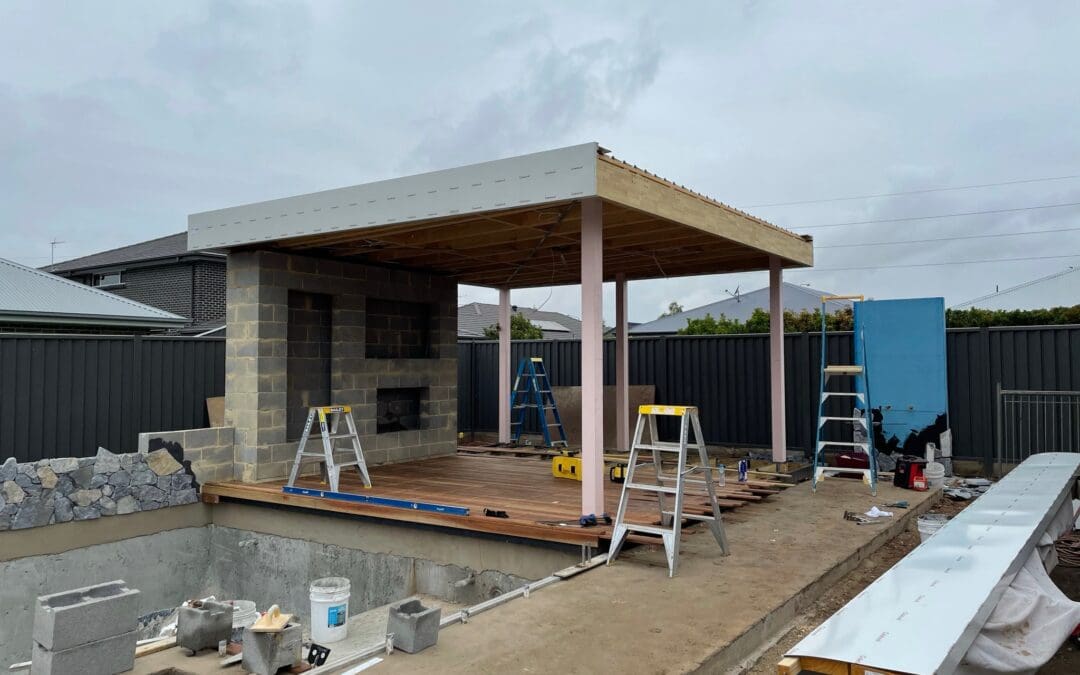
Ask most deck builders in Sydney what timber to use and you will hear the same answer: Merbau. It has been the default recommendation for years. It looks good, it is reasonably priced, and it is widely available.
But Merbau is not always the best choice. Depending on your climate, your block, how you use your deck, and how much maintenance you are willing to do, there are Australian hardwoods that outperform it on durability, appearance, and long-term value.
This guide compares the most common decking timbers used in NSW, with a focus on how each one handles the heat, UV exposure, rain, and temperature swings that Western Sydney and the Macarthur region throw at outdoor structures every year.
Why Merbau Became the Default
Merbau (also called Kwila) is an imported tropical hardwood, mostly sourced from Southeast Asia and the Pacific Islands. It became popular in Australia for three reasons: it was cheaper than domestic hardwoods, it came in long, straight lengths with minimal defects, and it had a rich reddish-brown colour that homeowners loved.
For many years, those advantages made it the obvious choice. But as Australian hardwood supply chains have improved and more homeowners have dealt with the downsides of Merbau firsthand, the picture has shifted.
Here is what Merbau does well and where it falls short.
Strengths: Attractive colour when freshly oiled. Good hardness (Janka rating around 8.6 kN). Naturally resistant to termites. Relatively affordable compared to premium domestic hardwoods. Widely available in consistent grades and lengths.
Weaknesses: Heavy tannin leaching for the first 12 to 18 months. When Merbau gets wet, it releases a dark reddish-brown liquid that stains concrete, pavers, rendered walls, and anything else it runs onto. This is a cosmetic issue, not a structural one, but it frustrates homeowners who did not expect it. Merbau also has a durability rating of Class 2 above ground, which means it is durable but not in the top tier. In high-moisture environments or ground contact, it does not last as long as Class 1 species.
Merbau is a solid mid-range choice. But calling it the best option across the board ignores the strengths of Australian species that were grown in and for this climate.
Spotted Gum: The All-Rounder
Spotted Gum is arguably the best general-purpose decking timber available in Australia. It is a native hardwood grown across the east coast, which means it evolved in the same climate conditions it needs to withstand on your deck.
Durability: Class 1 above ground, Class 2 in ground. This is the highest above-ground durability rating, meaning it resists rot, decay, and insect attack better than Merbau.
Hardness: Janka rating of approximately 11 kN. Significantly harder than Merbau, which means it resists dents, scratches, and wear from foot traffic, furniture, and dropped items.
Appearance: Spotted Gum has a wide colour range, from pale brown to deep chocolate, often with dramatic grain variation and a distinctive interlocked figure called “fiddleback.” No two boards look the same. If you want a deck with natural character and visual depth, Spotted Gum delivers something Merbau cannot match.
Tannin leaching: Spotted Gum does leach tannin, but significantly less than Merbau. The staining is lighter in colour and typically stops within a few months rather than lasting over a year.
Performance in Western Sydney: Spotted Gum handles heat and UV exposure well. It greys gracefully if left unoiled (some homeowners prefer this look) and responds well to oiling for those who want to maintain the natural colour. Its density means it absorbs less moisture during rain, which reduces the expansion and contraction cycling that causes cupping and splitting in softer timbers.
Cost: $380 to $520 per square metre installed. More expensive than Merbau upfront, but the longer lifespan and lower maintenance frequency offset the price difference over 15 to 20 years.
Blackbutt: Clean Lines, Consistent Colour
Blackbutt is the timber of choice for homeowners who want a lighter, more uniform look. While Spotted Gum is dramatic and varied, Blackbutt is calm and consistent.
Durability: Class 1 above ground, which puts it in the same top tier as Spotted Gum.
Hardness: Janka rating of approximately 9.1 kN. Harder than Merbau but slightly softer than Spotted Gum.
Appearance: Blackbutt ranges from pale golden to light brown with minimal grain variation. It gives a clean, modern aesthetic that pairs well with contemporary home designs. This consistency is its main selling point for homeowners who want a uniform look across the whole deck.
Tannin leaching: Minimal. Blackbutt produces far less tannin than Merbau, making it a better choice for decks adjacent to light-coloured walls, rendered surfaces, or concrete paths.
Performance in Western Sydney: Blackbutt performs well in hot, dry conditions and handles the Western Sydney climate without issues. It does require regular oiling to prevent greying, similar to other hardwoods. Blackbutt is also one of the more fire-resistant timbers, which matters for properties in bushfire-prone areas near Picton, Wilton, and the Southern Highlands fringe. It is listed as a suitable species for construction in BAL 12.5 and BAL 19 zones under AS 3959.
Cost: $370 to $500 per square metre installed. Comparable to Spotted Gum.
Ironbark: Maximum Durability, Maximum Hardness
If longevity is your top priority and budget is secondary, Ironbark is the strongest option on this list.
Durability: Class 1 above ground and Class 1 in ground. This is the highest rating in both categories. Ironbark is the timber you choose when you want a deck that will outlast the house.
Hardness: Janka rating of approximately 14 kN. This is one of the hardest commercial timbers in the world. It resists scratches, dents, and surface damage better than any other option listed here.
Appearance: Deep red-brown to dark brown with a tight, interlocked grain. Ironbark is a dense, heavy timber that looks and feels substantial. When oiled, it has a rich, warm colour that deepens over time.
Tannin leaching: Moderate. Ironbark does leach tannin, though less aggressively than Merbau. Expect some staining on adjacent surfaces for the first six to twelve months.
Performance in Western Sydney: Ironbark handles heat, UV, and moisture cycling better than almost any other decking timber. Its extreme density means it absorbs very little moisture, which minimises expansion, contraction, cupping, and splitting. The same density makes it naturally resistant to termites and borers.
The trade-off: Ironbark is difficult to work with. Its density means it blunts saw blades faster, requires pre-drilling for every screw, and takes longer to install. This increases labour costs. It is also heavier, which affects subframe design and handling on site. Ironbark decks need a more robust subframe to carry the additional weight.
Cost: $420 to $580 per square metre installed. The highest price point on this list, reflecting both the material cost and the additional labour time.
Treated Pine: The Budget Option (With Clear Limitations)
Treated pine is the cheapest decking material and it is structurally sound for outdoor use. H3 treated pine is rated for above-ground exterior applications and is widely used for subframes even when the deck boards are hardwood or composite.
But as a deck board material, treated pine has real limitations.
Durability: The preservative treatment protects against rot and termite attack, but the underlying timber is soft. It dents easily, splinters as it ages, and develops cracks and surface checks within a few years of installation.
Hardness: Janka rating of approximately 4.5 to 5.5 kN. Less than half the hardness of Spotted Gum. This shows in everyday use: dropped tools, dragged furniture, and heavy foot traffic leave visible marks.
Appearance: Treated pine has a green tint when new (from the treatment chemical) which weathers to grey if left unfinished. It can be stained or painted, but the finish needs refreshing every 12 to 18 months because the soft timber absorbs and releases moisture rapidly.
Lifespan: 10 to 15 years with regular maintenance. Without maintenance, treated pine deck boards can deteriorate within 5 to 8 years.
When it makes sense: Treated pine works for budget-conscious projects where the deck is a temporary or interim solution, for rental properties, or for areas that will eventually be covered or enclosed. It is not the right choice for a family deck that you want to enjoy for 20 years.
Cost: $180 to $280 per square metre installed.
How to Choose the Right Timber for Your Deck
The best timber for your deck depends on four things: your budget, your aesthetic preference, how much maintenance you are willing to do, and the specific conditions on your block.
If you want the best value over 20 years: Spotted Gum. It costs more upfront than Merbau but lasts longer, needs less maintenance, leaches less tannin, and looks better as it ages.
If you want a clean, modern look: Blackbutt. The consistent colour and minimal grain variation suit contemporary home designs. Also the better choice if you are in or near a bushfire zone.
If you want maximum lifespan and do not mind paying for it: Ironbark. It will outlast every other option on this list.
If you want the lowest upfront cost: Treated pine. Just go in with realistic expectations about lifespan and maintenance.
If Merbau is your preference: It is still a good timber. Just be prepared for the tannin leaching in the first year, and understand that it sits behind the Australian hardwoods on durability. If your deck is adjacent to light-coloured surfaces, consider a different species or plan for the staining.
Let Us Help You Choose
Token Building installs decks in all of the timbers covered in this guide, as well as composite options. We work across Camden, Macarthur, and the wider South West Sydney region. During your free consultation, we will look at your block, talk through your priorities, and recommend the material that fits your budget and your lifestyle.